



Why Is Website Speed Important? 7 Reasons Slow Loading Drives Customers Away
Imagine a user visiting your website for the first time, only to find that the page takes several seconds to load. As a result, there is a good chance they will leave before even seeing your content and move on to another website. Website speed is more than just a technical feature; it is an essential part of user experience, brand credibility, and business performance. In other words, a fast website helps users find what they need more quickly, while a slow website can undermine even the best design and content. In this article, we will explore why website speed matters and how a slow website can result in lost visitors and potential customers.
1. A Slow Website Makes Users Leave
Internet users generally expect web pages to load quickly and without unnecessary delays. Therefore, when a page takes too long to load, users may assume that something is wrong with the website or simply decide that it is not worth waiting for. For example, this is especially important for key pages such as your homepage, product pages, service pages, and contact forms. More importantly, the easier and faster it is for users to find the information they need, the more likely they are to interact with your website. As a result, good website performance can play an important role in keeping visitors engaged.
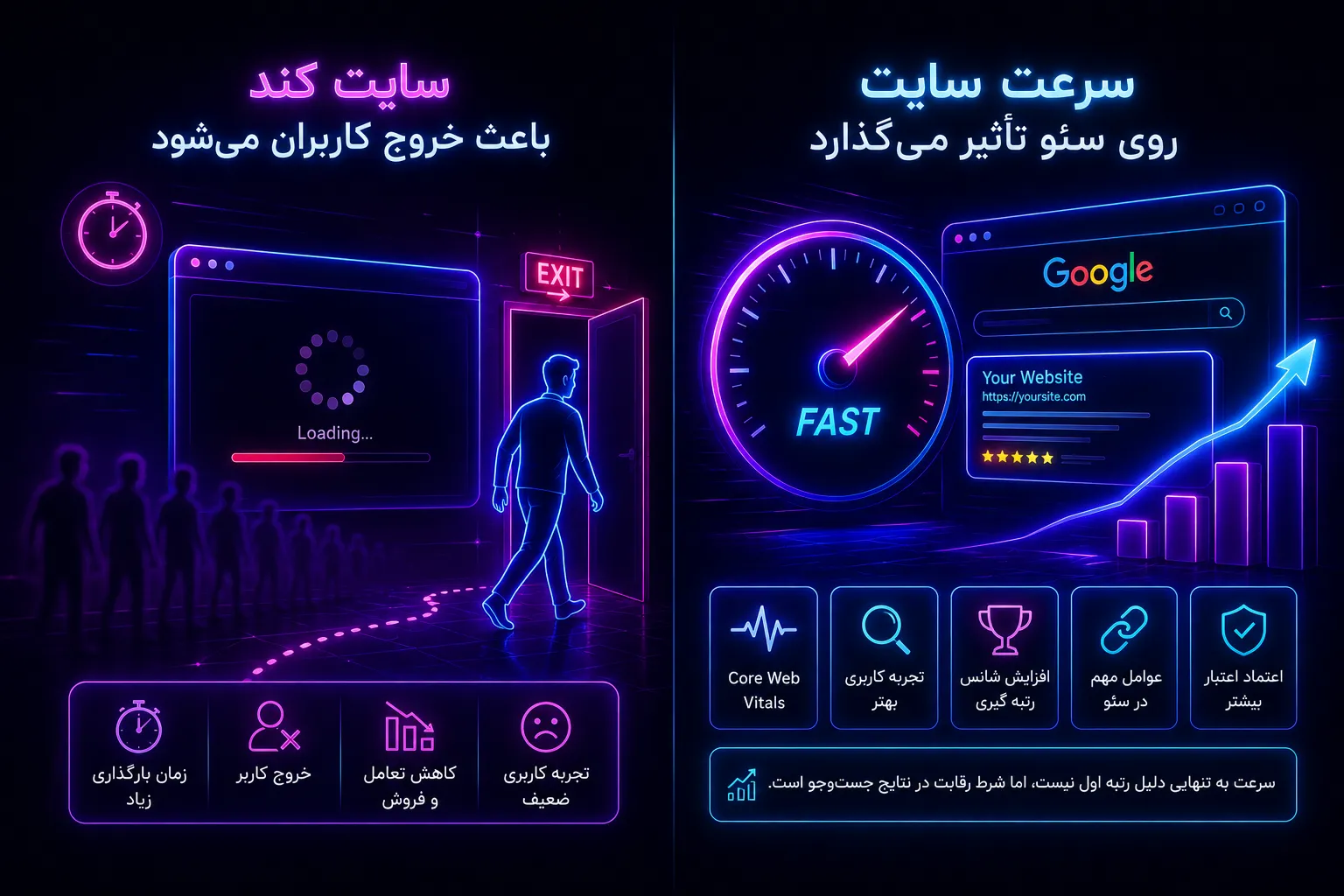
2. Website Speed Affects SEO
Website speed is an important part of the overall user experience. At the same time, Google considers several performance-related factors when evaluating web pages. One of the most important concepts in this area is Core Web Vitals, a set of metrics designed to measure real-world user experience in terms of loading performance, responsiveness, and visual stability. However, website speed alone does not guarantee a top position in Google search results. SEO depends on many different factors, including content quality, website authority, page structure, internal linking, and user experience. Therefore, if your website performs poorly and provides a frustrating user experience, you may lose some of your ability to compete effectively in search results.
3. Slow Loading Times Can Reduce Conversion Rates
For many websites, getting visitors is not the ultimate goal. Instead, the goal is often to turn those visitors into customers or leads. An e-commerce website needs to turn visitors into customers. Similarly, a service-based website needs to encourage users to make an inquiry or contact the business, while a corporate website needs to build trust and credibility. For instance, imagine a user clicking on a “Buy,” “Place Order,” or “View Services” button, only to wait several seconds for the next page to load. In this situation, the user may lose patience and abandon the process. Consequently, the business may lose a potential customer. For this reason, improving website speed can be an important part of optimizing conversion rates and creating a better customer experience.
4. Mobile Users Are Even More Affected
Today, a significant portion of website traffic comes from smartphones. As a result, mobile performance has become an important consideration for website owners. On mobile devices, network conditions, device performance, and data usage can all affect the user's experience. Therefore, a website that feels fast on a powerful desktop computer may not provide the same experience on a smartphone. A professional website should not only be responsive but also optimized for performance across different devices. In addition, being responsive does not simply mean displaying correctly on mobile. Instead, providing fast and smooth performance on mobile devices is equally important.
5. A Slow Website Can Hurt Your Brand's Credibility
Users often see a website as an extension of a brand. Therefore, the quality of your website can influence how visitors perceive your business. If a business provides professional services but its website is slow, unstable, or overloaded with unnecessary elements, that experience may influence how users perceive the business itself. On the other hand, a fast and smooth website can communicate professionalism and attention to detail. Furthermore, in many cases, the website is the first interaction a potential customer has with your brand—long before they speak to your team or purchase a product.
6. Slow Performance Creates a Poor User Experience
User experience is not limited to colors, fonts, and visual design. Instead, it includes every interaction users have with your website. For example, if users cannot quickly reach the page they are looking for, images take too long to appear, or page elements unexpectedly shift while loading, the overall experience can suffer. A beautiful design is only truly effective when it is also fast, smooth, and easy to use. For this reason, performance should be considered from the very beginning of the website design and development process rather than treated as something to fix after the project is completed.
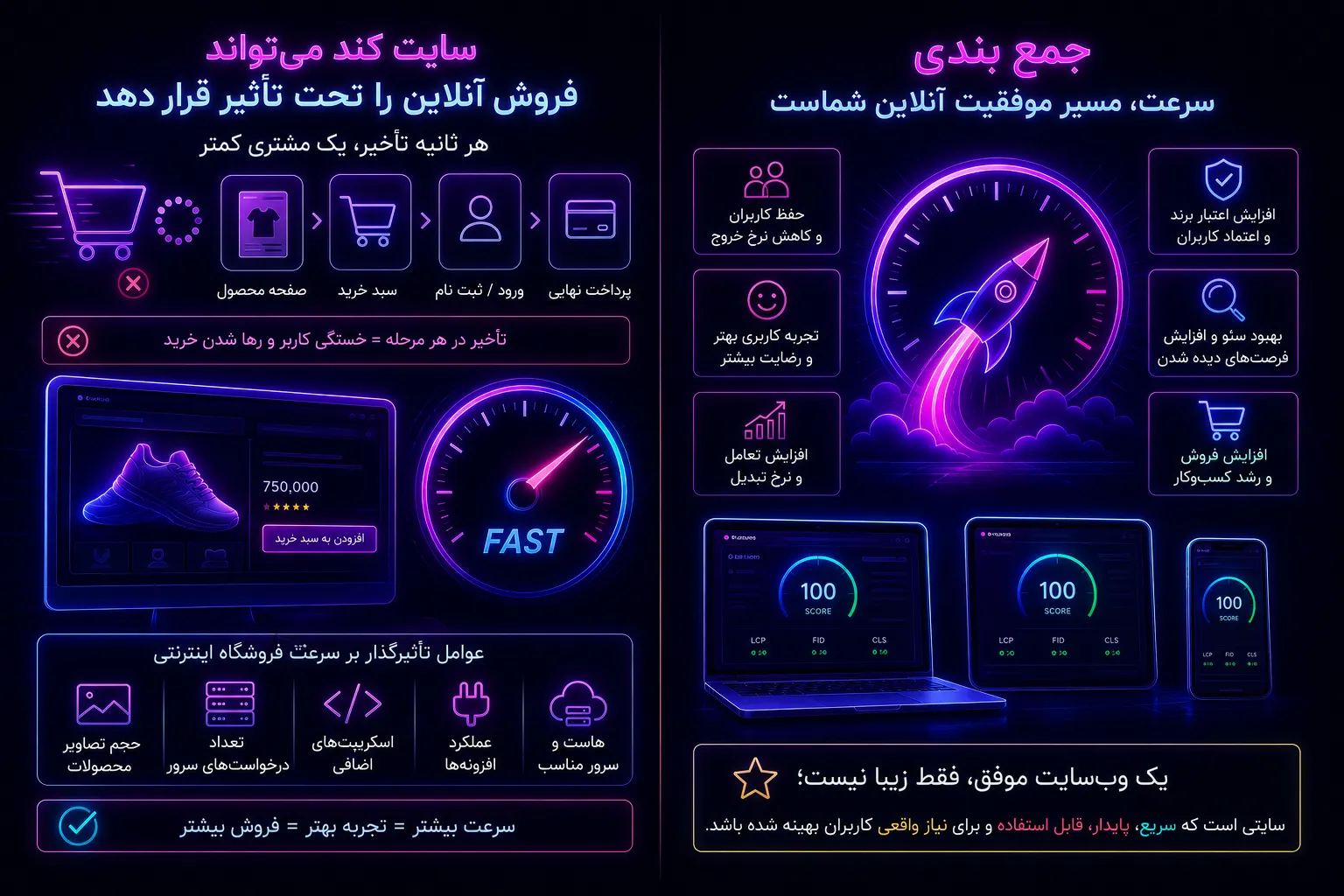
7. A Slow Website Can Hurt Online Sales
Website speed becomes even more important for e-commerce websites. In particular, online stores often require users to go through several steps before completing a purchase. Before completing a purchase, a customer may visit several pages, from product pages and shopping carts to account and checkout pages. However, if every step involves unnecessary delays, the purchasing process can quickly become frustrating. Moreover, even small details such as large product images, excessive server requests, unnecessary scripts, and poorly optimized plugins can affect the performance of an online store. Therefore, website speed should be an essential part of e-commerce optimization.

Conclusion
Website speed is closely connected to the experience users have with your brand. Therefore, it should be considered an important part of your overall website strategy. A slow website can lead to visitors leaving, lower engagement, a poor user experience, and, in some cases, missed sales opportunities. On the other hand, improving website performance can make the entire browsing experience faster, smoother, and more convenient. If your website is supposed to generate customers for your business, its speed should never be treated as a secondary concern. Furthermore, professional design, high-quality content, and effective SEO deliver the most value when users can access them quickly and without unnecessary frustration. Ultimately, a successful website is not simply one that looks good; it is a website that is fast, reliable, easy to use, and optimized around the real needs of its users.
Speed in Mahan Tech Projects
All Mahan Tech projects are launched with optimized SEO and performance, providing a professional platform for business growth. Click the link to explore Mahan Tech’s projects and see their speed for yourself!